The Tower That Affirmed Me: How Affirmation Tower Confirmed My Decision About Becoming an Architect
There's a proposed skyscraper on the west side of Manhattan that might end up being the tallest building in the Western Hemisphere, and depending on which version of it gets built, it could also become the tallest building in the world owned by majority Black-owned companies. It's called Affirmation Tower, planned for 418 11th Avenue in Hudson Yards, and it's been through one full redesign already even though it hasn't broken ground yet. It's still just a proposal working its way through New York's approval process. But it's already done something a lot of finished buildings never manage: it made someone rethink who they were.
That someone was me.
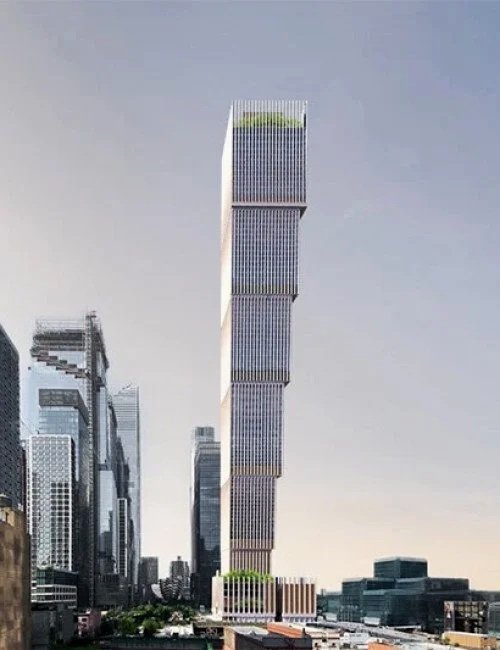
This is the one that stopped my scroll.
Okay, But Why Did a Building Do That
I had a phone full of half-finished sketches I never showed anyone. I'd stop mid-conversation because I noticed a cornice detail I liked. Classic "I'm probably not a real architect" behavior. Then I came across the renderings for Affirmation Tower and just sat there staring at my screen for way too long. Nothing about my life changed that day. But something about how I thought of myself did.
So yes, I know how it sounds to say a building named Affirmation Tower affirmed something in me. Stay with me anyway.
What This Building Actually Is
The team behind it is Peebles Corporation, McKissack & McKissack, Exact Capital Group, and the Witkoff Group, and the site is a 1.2-acre plot called "Site K." As of the most recent reporting I could find, submissions were still under review through Empire State Development's RFP process, so nothing here is locked in yet.
The version that got me, the one I actually fell for, was the original design by Sir David Adjaye. That version was 1,663 feet tall, five tiers stacked on top of each other, and would've made it the tallest building in the Western Hemisphere by roof height. Since then, OMA has stepped in and redesigned it. So the images in this post are from an earlier chapter of the building's story, not its current form. I still think it's the best chapter, but I'll get to that.
The Shape Is the Whole Point
Adjaye's design was five rectangular boxes, each one bigger than the last as you go up, wrapped in white terrazzo with floor to ceiling glass. It looks top heavy on purpose, like it's defying its own foundation a little. From certain angles it genuinely looks upside down.
Here's the part that got me though: the stacked shape is a reference to an Afro pick. Developer Don Peebles has talked about carrying one around New York in the 70s, and decades later that exact silhouette shows up ninety stories in the air over the Hudson. I've looked at a lot of buildings. I don't think I've seen one carry a piece of someone's actual personal history like that before, built right into the massing.
The new OMA version goes in a totally different direction. There's a pinch partway up the tower, an octagonal section that squeezes in on the north and south sides and pushes out east and west, so the building basically morphs from rectangular at the bottom to square at the top. Vertical metal columns split off into diagrid patterns right where the pinch happens. It's a completely different building now. No official height yet, but based on the renderings it's expected to beat out 30 Hudson Yards, which currently holds the title for tallest in that part of town.
Why the Name Isn't Just a Marketing Move
If this actually gets built, Affirmation Tower would be the tallest building owned by majority Black-owned companies in the world, and the tallest ever built with a woman-led contractor. The development team has committed more than 30% of construction contracts to minority and female-owned businesses. That's not a stat buried in a press release somewhere, it's kind of the reason the project exists.
The program keeps growing too. Current plans include mixed-income apartments, a convention center, retail, community space, a public observation deck around 1,000 feet up with mirrored surfaces and stadium seating (kind of a One Vanderbilt Summit vibe), and a National Civil Rights Museum done in partnership with the NAACP, probably tucked into the base near the Vessel and the High Line. This isn't a building you just look at from the sidewalk and move on. It's meant to be lived in, worked in, and walked through, if it makes it off the page.
Why I Think This One’s Different
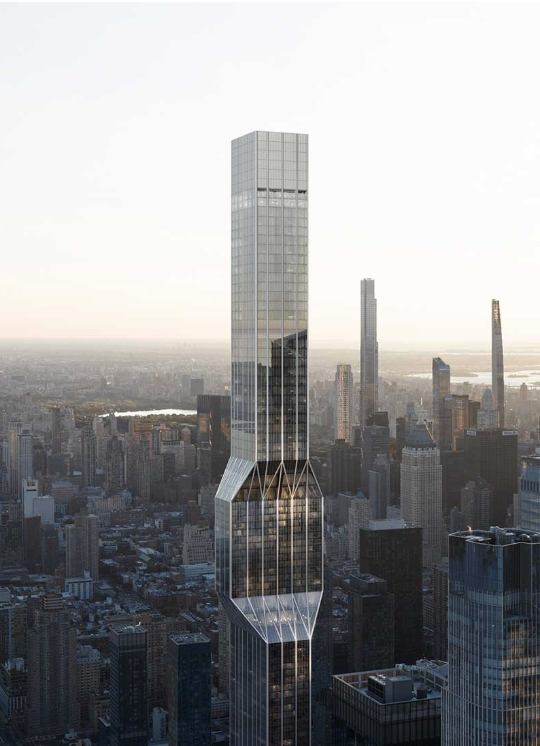
It was never trying to blend in.
It’s already survived a full redesign, and somehow, the mission never wavered. The architects changed, the shape changed, and a new, revised version of the tower emerged, but who’s building it and who it’s for stayed exactly the same. That’s what makes the project so interesting to me. The original design didn’t come from a wind tunnel or a zoning setback formula. It came from somebody’s memory of carrying an Afro pick in their pocket in 1970s New York. That kind of personal history making its way into architecture is rare.
And honestly, the ownership structure alone would make this project matter, even if the building looked like every other glass box in Hudson Yards. It doesn’t, but it wouldn’t need to.
Why I’m Still Calling It My Affirmation Tower
I know the name was never actually about me. And the version I first fell for might not even be the version that gets built in the end. But every person trying to make something, whether that’s buildings or anything else, needs a moment where something outside of them says, “Yeah, this is allowed. Go do this.”
Mine happened to have a name that already knew exactly what it was doing. If you’ve got your own version of this already, you know what I’m talking about. If you don’t yet, I hope you bump into yours the same way I did. Not by looking for it. Just by looking up.
